Knee pain is a frequent issue that brings individuals into Pain Free Performance. Pain in the knees can often be diagnosed as arthritis, instability, weakness, or tearing of the supporting structures. In order to identify the root of the pain and not just treat the symptom, the first assessment needs to focus on the joint position of the knee that created the diagnosis.
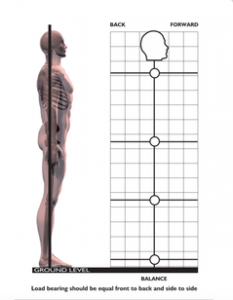
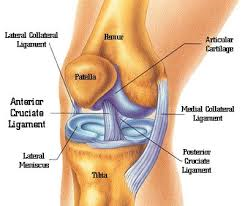
During an initial assessment, it is important to palpate the joint position and identify muscular and structural imbalances. Clients with knee pain often present with knees that are rotated externally or internally from the hip. A kneecap (patella) or femur position (the position of the thigh bone from the hip) that is not straight creates an uneven distribution of load on the knee, ankle, and foot. The knee was designed to be a hinge joint and function by bending and straightening. If many of us are walking, running, and jumping with knees that are rotated, it is no wonder acute and chronic knee pain are frequently diagnosed and treated!
Our bodies are brilliant at compensating for muscular imbalances and changes in function. Clients with acute or chronic knee pain often stand with their knees bent in flexion to take pressure off the knee. This creates a cascade of compensations throughout the body. The hip begins to tilt, the spine is altered through rotation and flexion, and the ankle and foot begin to turn outward. Compensation for joint position and pain can lead to more issues down the road. When the joint position of the knee is rotated and out of alignment, individuals with knee pain who undergo imaging, such as an MRI or CT scan, may show a meniscus tear or cartilage degeneration. In our practice over the past decade and a half, many of these clients had been advised to have arthroscopic surgery that did not resolve their knee pain but instead made it worse. Recently, medical literature has supported this observation, stating that “for most patients with osteoarthritis of the knee, arthroscopic surgery offers little benefit” (Mounsey A, Ewigman B. Arthroscopic surgery for knee osteoarthritis? Just say no. J Fam Pract. 2009 Mar;58(3):143-145. PMID: 19284940; PMCID: PMC3183924).
So how do we treat knee pain? At our practice, we use postural alignment therapy, the Egoscue Method, to identify the root cause and imbalances creating pain and work toward lasting change in a functional body. This is accomplished through a whole-body assessment designed to reduce knee pain while enhancing overall mobility and function. The Egoscue Method does not just address the pain—it addresses the root cause of the pain.