• Skip to main content
  • Skip to footer

Pain Free Performance — Posture Alignment Therapy

Live Pain Free!

  • HOME
  • Live Pain Free
    • BACK PAIN
    • KNEE PAIN
  • What We Do
    • Therapy Appointments
    • Virtual Appointments
    • FAQ
  • Testimonials
    • Doctor Testimonials
    • Client Testimonials
      • Lynn’s Story
      • BACK PAIN: MISSY’S STORY
    • Case Studies
  • ABOUT US
    • Our Team
    • Cindy Meyers, PTA/PAS
    • Jessica Powell, RN, BA/PAS
  • Contact
  • BLOG
  • Resources

Posture Alignment

The Evolution of our Practice

March 9, 2026 by Jess Powell

Our clinic first opened in 2006 when our founder, Cindy, encountered a book that shifted her understanding of how the body experiences and resolves pain. At the time, Cindy was working in physical therapy when a client introduced her to Pain Free by Pete Egoscue. The book’s central idea—that the body functions as an interconnected system—offered a new perspective on therapeutic exercise and muscular compensation.

Trusting her intuition, Cindy began applying these principles with her physical therapy patients. The results were striking. Patients who had been preparing for surgical procedures were improving and, in some cases, no longer needed them. Encouraged by these outcomes, Cindy took a leap of faith and opened the first postural alignment therapy clinic in Central Virginia.

After completing her certification through Egoscue University in 2006, Cindy continued to deepen her belief that the body has an extraordinary capacity to heal when muscular imbalances and postural dysfunction are properly addressed. For more than 20 years, our practice has helped clients experience meaningful improvements in function, longevity, and overall quality of life—often allowing them to move beyond chronic pain.

As our understanding of the body has continued to evolve, so has our approach. While Postural Alignment Therapy remains the foundation of our work, we have thoughtfully incorporated additional modalities when they support the healing process. These include hands-on techniques such as Strain Counterstrain, as well as therapeutic technologies like red-light and infrared laser therapy.

Equally important to us is the process of assessment. Each client is evaluated individually through observation, movement analysis, and hands-on palpation. This allows us to understand the subtle compensations within the body in ways that standardized software or automated assessments often cannot capture.

In 2018, after more than a decade as Egoscue affiliates, we chose to continue our work independently at Pain Free Performance. This transition allowed us to expand the services we offer while maintaining the principles that have guided our practice since the beginning.

Filed Under: Activity, Aging and alignment, Alignment, Arthritis, Back Pain, Egoscue, Exercise, Function of movement, Headache, Injury and exercise, Joint Pain, Joint Replacement, Knee Pain, Movement, Movement For Alignment, Muscle Memory, On-line Egoscue Appointments, Plantar Fasciitis, Posture Alignment, Shoulder Pain, Sports Injury and Egoscue, Strength Training

Alignment: Treating the Body as a Whole to alleviate Pain

January 19, 2026 by Jess Powell

Healthcare today is focused on the parts. Our healthcare practitioners are specialized and focus on specific sites and no longer view the body as a whole. As a result, we are missing how each site impacts another directly.

With the Egoscue method, alignment matters. When the position of the head, shoulders, vertebrae, hips, knees, and ankles are in line the forces through the joints are distributed to allow movement with minimal effort. This is the ability to move freely and without pain.

When our body is not in alignment, our joints wear down and uneven load is placed on parts of our body that are not meant to bear the added weight. This dysfunction is often the root of pain.

Many clients find Egoscue after trying other modalities that are not addressing the compensation created by their tissues, muscles, and joints. When we see clients for the first time, their gait and the movement of their body tells the story of a system trying to fix its parts. In order to determine what is causing their neck pain, knee pain, or hip pain we must determine what body part positions are misaligned.

Our job is to release the muscular compensation and strengthen the correct muscles to bring the body into alignment. We do this through specific exercises targeted towards what is off in a client’s specific body. After each exercise, we use gait analysis and functional testing (like an arm circle or reaching to touch the toes) as tests to see how the body is changing. As things become in a better joint position, the body is noticeably moving more fluidly, straighter, and more balanced.

This is why we must consider the body holistically when pain is present. Often the site or location of pain is not the cause. Our goal is to identify the dysfunction and create an integrated muscular skeletal system where movement is freer and function is unlimited.

Filed Under: Aging and alignment, Alignment, Back Pain, Egoscue, Exercise, Function of movement, Joint Pain, Knee Pain, Movement For Alignment, Muscle Memory, On-line Egoscue Appointments, Posture Alignment, Shoulder Pain Tagged With: alignment, alignment expert, ankle injury, arthritis pain, back pain, balance, Charlottesville Egoscue, Foot pain, Functional movement, hip pain, joint pain, knee pain, muscle imbalance, neck pain, nerve pain, pain management, Pain relief, pain treatment, plantar fasciitis, scoliosis, shoulder pain, treatment for pain

Misalignment leads to Neck & TMJ Pain

January 4, 2024 by Jess Powell


Our head is the center and peak of our body. When the head and neck are out of alignment, the weight of our head increases the load on our neck by 10 pounds per every inch that our head is forward. As our culture continues to become tech focused, the root of neck pain and jaw pain are due to our misaligned necks and forward heads. 


Our neck is made up of the top part of our spine: the cervical spine. The cervical spine is a slightly concave curve that develops during the first three months of life as infants learn to lift and turn their head. The curve of our neck allows for enhanced mobility of our head. This is why we can turn our head to see something without rotating or turning our spine and shoulders. 


Throughout the past 20 years our culture’s behavior has changed. We no longer turn our head to look for cars behind us while driving because our rear cameras alert us when someone is there. Work days have shifted to being predominantly at the computer. The average time an adult spends on their phone is more than three hours per day. The decrease in movement of our neck and increased forward head has led to a loss of the concave cervical curve.  Without the cervical curve of our neck to support our head, our skeletal system shifts and leads to increased tension in the muscles that connect our neck to our shoulders and jaw misalignment.  


Within the past few years at our practice, we have seen this increase in clients presenting with neck pain and temporomandibular joints (TMJ) pain.  As the head becomes more flexed forward, the joints that connect our jaw to our head begin to shift in response to the misaligned spine of our neck. The misaligned jaw often is identified by “clicking” or pain from overuse of chewing/talking in a misaligned joint positioning. Often clients with forward head positioning and jaw misalignment present with headaches in conjugation to neck pain and TMJ pain. Forward head positioning leads to decreased blood flow to the brain from poor alignment. It might sound unusual that headaches and jaw pain are connected to your alignment, but as the head shifts forward the cervical spine becomes more flexed, decreasing blood flow to the brain, enhancing strain on the muscles around the neck, and often creating shifts within the jaw.


At our practice, we treat the misalignment of the head positioning that creates TMJ pain and neck pain by addressing the body as a unit. We focus to align the body vertically and reduce the flexion of the neck. One example of this would be aligning the body against a wall and placing a block between the knees with active pressure. This position allows the feedback of the wall against the head, shoulders, hips, and ankles. When holding this positioning daily, the muscles of the neck and shoulders begin to relax and have reduced tension and muscular compensation. Overtime, we are able to see a reduction in the flexed position of the head, correct curvature within the spine, and the jaw becomes more aligned.


Our goal during a postural alignment therapy evaluation is to identify what is driving the forward head position and jaw misalignment. Through a complete health assessment, functional testing, and gait analysis we can begin to understand the muscular imbalances in a client’s body. This will allow us to identify the muscles that need to be strengthened or released to bring the body into alignment. We do this through corrective exercises that will be done daily at home in the order to address the misaligned neck, forward shoulders, and jaw positioning. Once the body is aligned and the forward head position and shoulders are less rounded, the pain will subside and our clients are able to live a functional pain free life.

Filed Under: Alignment, Neck Pain, Posture Alignment Tagged With: alignment, alignment expert, alternative to surgery, forward head, Functional movement, headache pain, herniated disc, jaw pain, misalignment, muscle imbalance, neck pain, nerve pain, pain management, Pain relief, pain treatment, Posture Alignment, Posture Alignment Exercises, Posture Alignment Specialists, Posture Alignment Therapist, shoulder injury, shoulder pain, tech neck, TMJ, TMJ pain, treatment for pain

A Simple Trick to Test Your Alignment

July 31, 2023 by Jess Powell

Many clients seek out our practice to reduce pain and regain their quality of life. 

Often, they are not aware that their body is out of alignment. 

When one aspect of the body is altered, it changes the function of the muscles and joints that surround that site. 

For most of us, our work week involves sitting at a desk in front of a computer. 

This position drives the shoulder forward, forcing the upper back to round, and bringing the head and neck into a flexed position.

In order to not develop chronic neck, shoulder, and back pain here is a simple trick to see if you body is aligned:

Stand vertically at the wall with the back of your head, shoulders, hips, and feet touching the wall.

In this position, is your head able to touch the wall? Or is there tension in your neck from bringing the head back?

For every inch forward that your head is from the wall, it increases the weight of your head on your neck by 10 lbs!

With the Egoscue method, we can reduce the forward head positioning and neck strain by getting to the root of the problem in the body.

Filed Under: Alignment, Back Pain, Egoscue, Function of movement, Headache, Joint Pain, Movement For Alignment, Neck Pain, Posture Alignment, Shoulder Pain Tagged With: alignment, alignment expert, back pain, Charlottesville Egoscue, Egoscue, joint pain, neck pain, Posture Alignment, Posture Alignment Exercises, Posture Alignment Therapist, shoulder pain

How long does it take to create pain relief using posture alignment therapy?

December 28, 2022 by Jess Powell

Most of the clients we see are in pain. These clients come to us for relief with their knee pain, back pain, hip pain, and shoulder pain. Oftentimes, our clients have been to chiropractors, physical therapists, doctors, massage therapists, and acupuncturists that have been unable to create a lasting change with their muscle and joint pain. This can be challenging for our clients because their journey for pain relief has already taken weeks and months before we meet our clients for the first time. 


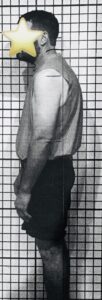
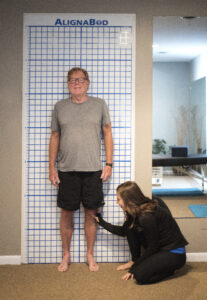
In order to create lasting pain relief, as Postural Alignment Specialists that practice The Egoscue Method, we assess the muscular imbalances in their bodies. This begins through a complete health assessment and history to understand the patterns of movement (or lack of movement) that led to pain. We complete postural photos to see how their joint position aligns against a grid to understand how their joints are loading. This can reveal if an elevated shoulder and hip are leading to the back pain or if a forward head position is causing the shoulder pain. Finally, we complete a series of functional testing and gait analysis to determine what muscles are active or inactive that are resulting in muscular compensation and pain. 


When our clients leave their first postural alignment session, they can expect to feel a change in their body. This often results in a decrease in pain. If a client’s body has compensated for years, they might notice feeling “lighter” or “straighter” after doing their Egoscue therapy exercises. This is a sign that their body is becoming more functional and balanced. 


The work towards alignment and health takes time and effort. Our muscle memory begins to take effect in 90 days and is often the time our clients begin to notice less pain due to their enhanced alignment. Change is not always linear and might result in peaks and valleys. We encourage clients to remain focused on what is changing. Our cells and tissues are constantly adapting and we will continue to adapt new exercises and stimuli to create a change in the muscle structure. One of the great benefits of our bodies is that they are dynamic and constantly in motion. This is why the method works! Now, let’s get moving!

Filed Under: Activity, Aging and alignment, Alignment, Arthritis, Back Pain, Egoscue, Foot Pain, Function of movement, Joint Pain, Joint Replacement, Knee Pain, Leg Pain, Movement For Alignment, Muscle Memory, Neck Pain, Plantar Fasciitis, Posture Alignment, Shoulder Pain, Sports Injury and Egoscue Tagged With: ACL tear, alignment, arthritis, back pain, Foot pain, herniated disc, Joint Replacement, knee pain, MCL tear, neck pain, nerve pain, plantar fasciitis, shoulder pain, stenosis

Painful Hip Flexors

February 5, 2020 by Jess Powell

It’s not uncommon for us to hear our clients mention waking up with tight, sore hip flexors. Hip tightness can occur for many reasons. Excessive sitting can cause the muscles to relax and deactivate becoming progressively weaker and shorter, creating pain.

Poor posture habits can create a structural imbalance which will cause an uneven pulling of muscles.  No matter the reason, tightness in the hip flexors will lead to decreased movement in the hip and change the way we walk, stand and sit. Our pelvic position will be out of line because the hip flexors are pulling the pelvis forward. This changes the load of our body and creates instability in our gait. Over time, the uneven load and misalignment leads to inflammation, arthritis and other degenerative changes causing pain.  What to do?

At Pain Free we will evaluate you individually to see what is going on with your body that’s creating the issue.  Part of the prescribed plan will retrain those hip flexors to let go, get back to their intended length and tension to eventually re-establish the entire body’s alignment restoring proper gait.  All of that equals being pain free!

Try this and see if you are able to notice a release:

Stand with your back against the wall. When your hips are touching the wall, your thighs and kneecaps will begin to release. If your thighs want to engage, stay in this position for 2-5 minutes until your thighs release and the backs of your legs begin to work.

Filed Under: Alignment, Arthritis, Joint Pain, Posture Alignment Tagged With: alignment, Egoscue, hip pain, muscle imbalance, Pain relief

Vertigo

November 6, 2019 by Jess Powell

Recently, we have had several clients come to see us with stories of having vertigo.  Often times they share the information as an aside to why they’re really here.  I want to explain why posture plays a huge role in the onset of vertigo for some people.  We took the following from Pete Egoscue’s insights on vertigo published on the Sonima website.  Be sure to check out the Egoscue E-cises Pete recommends at the end of his article:

VERTIGO

Vertigo is not pleasant. Its primary symptom is dizziness, sometimes so severe that the patient experiences nausea and vomiting, and it can last anywhere from a couple of hours to months and even years. Other symptoms range from headaches and eye twitching to sweating and hearing a persistent ringing in the ear. While the exact number of people who experience vertigo is not known, it has been estimated that 40 percent of all Americans will visit the doctor at some point in their lives because of vertigo. If you have had it, there really is no mistaking the sensation.

What Causes Vertigo?

Sometimes, vertigo is disease or illness-based, the result of a virus or a tumor, but doctors can quickly determine those cases. Most often vertigo is idiopathic, which is a medical term meaning no known cause or origin. In my experience, though, I’ve found most of those idiopathic versions of vertigo actually have a very specific cause—the position of the head. In other words, vertigo is usually about posture.

Humans are gravity machines; like the entire operating system of our universe, we rely on gravity to function, and because the body knows just how important our relation to gravity is, it offers redundant systems to make sure we have an accurate reading on our gravity field, i.e., the ground.
[Read more…] about Vertigo

Filed Under: Posture Alignment Tagged With: balance, dizziness, Egoscue, Vertigo

The Eight Laws of Physical Health

October 3, 2019 by Jess Powell

**This is a condensed version of The Eight Laws of Physical Health posted on the Egoscue University website.

THE EIGHT LAWS

I think we can all agree that the majority of laws are in place to protect us.  When it comes to the body, we have laws in place as well.  Eight of them, actually.  Pete Egoscue talks about them in his book, Pain Free.  Not only does he go in-depth about the Eight Laws, but gives you the Egoscue perspective on posture and pain.  Egoscue’s laws are a great way to understand how everything in the body works together.

  1. VERTICAL LOADING: Gravity is necessary for health. In order for gravity to exert a positive and dynamic influence on the body, the skeleton must be vertically aligned in its posture.


  1. DYNAMIC TENSION: A state of constant tension exists between the front of the body and the back.  The posterior portion is responsible for the erection of the body and the anterior is responsible for the flexion, or bending forward, of the body.  Neither activity can be performed correctly and healthily without this action.

[Read more…] about The Eight Laws of Physical Health

Filed Under: Alignment, Posture Alignment Tagged With: alignment, Egoscue, Functional movement, wellness

  • Page 1
  • Page 2
  • Page 3
  • Interim pages omitted …
  • Page 6
  • Go to Next Page »

Footer

Pain Free Performance, Posture Alignment Specialists

QUICK LINKS

  • Frequently Asked Questions
  • Virtual Appointments
  • About Back Pain
  • About Knee Pain
  • Client Testimonials
  • Our Team
  • Contact Us Today

Our Studio is located at
3054 Berkmar Drive, Suite C
Charlottesville, VA 22901
(434) 296-0600
We are also available for virtual appointments.

FacebookConnect with us!

© Copyright, Pain Free Performance, Posture Alignment Therapists serving Charlottesville and Albemarle County in Virginia.
Posture Alignment Therapy is available virtually or in person at our studio.
Charlottesville Posture Alignment Therapy to relieve back pain, neck pain, hip pain, shoulder pain, and other muscular and body pain.
PainFreePerformance.com
Web development by EJ Communications