Here is the link for our latest testimonial and recent local commercial… Enjoy!
BLOG
WELLNESS RETREAT …A GREAT SUCCESS !
A huge THANK YOU to all of the participants and practitioners that joined us at Montfair Resort Farm for a day of WELLNESS!
It never ceases to amaze us how many gifted practitioners we have working in Charlottesville and the surrounding areas.

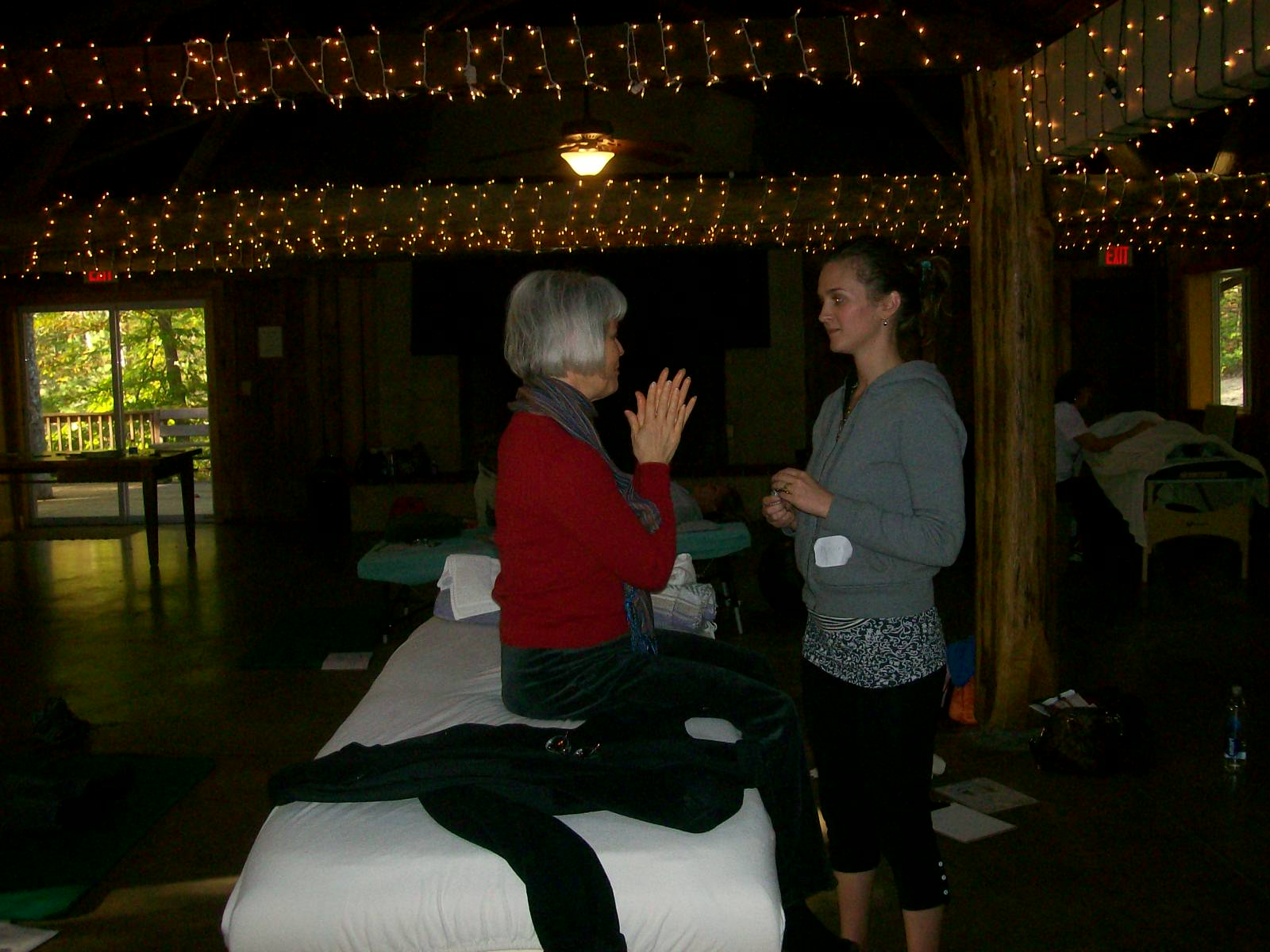
Our day started with an Egoscue class to bring our bodies into proper alignment. This was followed by a Restorative Yoga session. After we were aligned and stretched, various gifted practitioners shared information about their specific treatment techniques. These included Acupuncture, Chiropractic Care, Craniosacral Therapy, Tai Massage, Structural Integration, Acupressure and MELT (myofascial elongation).
We enjoyed a healthy lunch followed by some time to visit and enjoy the beauty of the surroundings.
The picture above is from our experience of Tai Chi in the great outdoors. We followed this with a session on self hypnosis. After everyone was aligned, stretched, fed and filled with the peace of meditation, we had the opportunity to experience a variety of hands on work.
An incredible day!
CINDY GETS MELT CERTIFIED
What is M.E.L.T ??
Six years ago everyone was asking…… 
“What is Egoscue”?? Well…. Here I go again….
In my quest for understanding all that I can to empower my clients with tools that will offer them the best care possible, I discovered a method called MELT. This stands for Myofascial Energetic Length Technique. This technique involves the connective tissue in our body.
What exactly is connective tissue?
If you ever pulled the skin off of a piece of chicken before you cooked it, you will see a thin, white sheath…that is connective tissue. And as our manager so kindly pointed out… vegetarians can think of peeling an orange and seeing the protective coating over the fruit as the connective tissue. Connective tissue covers every cell, nerve, muscle, bone and organ in our bodies.
When the connective tissue becomes dehydrated, it loses its buoyancy and can no longer do its job to support and protect our muscles and joints. In addition, the nervous system becomes over-stressed and the tissues cannot act as a communication network. That leaves you with tissue that is now bound down to the muscles and a nervous system that stays in a state of “dis-ease” (meaning the body can’t rest). When you go to move, the muscles still move but the connective tissue is pulled causing that stiff/painful feeling.
When you MELT you push fluid back into the tissue and your proprioception (how your body senses its enviornment) improves. At PAIN FREE PEFORMANCE, we are combining MELT with Egoscue to enhance the body’s ability to RESTORE POSTURE…. CREATE BALANCE….LIVE PAIN FREE!
We are offering a MELT class on Wednesdays at noon… come try it out. If you want to learn more feel free to call me at 434-296-0600
“the tower”
The Supine Groin Exercise often uses a piece of equipment called “the tower”. This particular exercise creates powerful changes throughout the body. It will help restore your alignment and help to retrain your gait pattern.
Here’s a helpful video that further explains what the tower is and how it works!
http://www.youtube.com/egoscuesd#p/a/u/2/zBSeycBZ9V8
exercise of the day!
This e-cise is almost everyone’s favorite. it’s simple and is called Static Back:
Find your favorite couch or ottoman, and put your legs up so that the hips and knees are at 90 degrees.
Notice where the back of your head contacts the floor, take note if your shoulders are resting comfortably on the floor or are they rounded forward. Is your low back touching the floor? After about 5 min., notice if anything feels different…….. This exercise begins the realignment of the shoulder girdle with the pelvis.

Kean
This post is neither Pain Free nor Egoscue related.
We would simply like to share a photo with you that made us feel proud, touched and honored.
This is one of our clients. His name is Kean. Each time Kean comes into the office, he brings us gifts. Be it flowers, fresh apple cider or even jelly beans, Kean’s gifts are reflective of his big ole heart. Kean is holding a photo of his son, also named Kean, who is serving our country overseas. We would like to honor both Keans for serving us as individuals and as a country.
Both of these men enrich and inspire our lives.

Gumby does Egoscue
As you can see, Gumby did static back this morning:

He also practiced his assisted hip lifts:

We have fun here at Pain Free Performance. You should come visit!
Why do so many suffer from back pain???
Here is an article from Egoscue.com on how our backs work, and how we can ease our bodies into a more natural (and less painful) posture while still being productive:
Lower Back Pain Relief
The symptoms of back pain can vary from low grade aches to full blown back spasms. The urgency to solve the back pain consumes your life and drastic treatment procedures are pursued without a second thought. Anyone who has suffered through a severe back spasm knows how excruciating it really is. These spasms are so intense it seems this kind of pain is in a class of its own.
This type of pain is so unbearable that it has been known to prevent people from being able to think straight. One of the best ways to treat back pain is to stop it before it happens and when it does happen, find a way to break the spasm before it accelerates to full blown. The best way to prevent back pain without drugs, surgery or manipulation is knowing the correct way to exercise and function in every day life.
When you know what the cause of your pain is, only then will you have the ability to know how to prevent it. Keeping your body healthy and flexible is key, it’s all about knowing how to take care of yourself. Proper nutrition helps in the flexibility of muscles and allows them to heal faster should they get pulled or torn. Also, certain stretching techniques and having proper posture while exercising is essential to preventing back spasms and residual pain.
For those who suffer from degenerative disc disease, spondylolisthesis, spinal fusions or scoliosis embody the symptoms of a chronic condition. Sufferers can help their conditions by focusing attention on the muscles involved in stabilizing the body’s skeleton. These very important muscles should be kept strong, flexible and balanced in all movements.
The spinal column is composed of 33 individual vertebrae, stacked one on top of one another, and threaded with the spinal cord. The spine can be looked at as the drive shaft as its unique shape allows the body to pull off extraordinary balancing acts on a daily basis. However, the muscles are also essential, not only to retain the spine’s shape but to hold it erect. Conversely, inactive, atrophied, and compensating muscles alter the lumbar, thoracic, and cervical spinal curves. Over time in the body’s improper movement and malnourished lifestyles, the magical S-Curve diminishes, taking with it the spine’s flexibility, load-bearing strength and shock-absorbing capacity.
Abandoned by the muscles, and losing the integrity of its curves, the spine is at the mercy of gravity. Rigidity sets in and the body does what it does best and protects itself by throwing the muscles into contraction. Eventually, the spine reaches its limits and it begins to stiffen the posture in a compromised flexion position. The result is chronic back pain; the cure is proper nutrition and knowing your body’s limits.
Don’t push yourself; if something’s too heavy than don’t lift it; if you feel yourself experiencing pain while sitting at your desk everyday, adjust your surroundings. Make sure your chair is properly positioned so your elbows are at a 90 degree angle on the desk and your eyes are parallel with the computer screen. These small gestures can go a long way in preventing future chronic back lower back pain.
this article is from http://www.egoscue.com/about/articles.php